


Updated October 2026 by the factory-trained techs at US Boatworks, Kansas City
Knowing how to winterize a boat motor is the cheapest insurance you'll ever buy. Skip it, and one hard freeze can crack an engine block, split a manifold, or break a gearcase. That's a repair bill in the thousands and a spring spent in the shop instead of on the lake.
The good news: winterizing isn't complicated when you know the steps for your engine. A sterndrive and an outboard are winterized differently, so this guide covers each one separately. We've been winterizing Mercury, MerCruiser, Volvo Penta, and Evinrude/Johnson/OMC engines for over 40 years. Here's exactly how our techs do it.
Quick answer: how do you winterize a boat motor?
- Stabilize the fuel and run the engine so treated fuel reaches it.
- Change the engine oil and filter (four-strokes, sterndrives and inboards).
- Get every drop of water out: drain the block and manifolds on a sterndrive or inboard, or trim an outboard fully down.
- Change the gear lube in the drive or lower unit and check it for water.
- Protect the engine (fogging where your manual calls for it), grease the fittings, and put the battery on a maintainer.
When Should You Winterize Your Boat?
Winterize before the first hard freeze, not after it. In the Kansas City area, that usually means late October to early November. One night in the 20s is all it takes for trapped water to freeze and expand.
If you plan to keep boating into fall, watch the 10-day forecast. Once lows start dipping toward freezing, it's time.
Why Winterizing Matters
- Freeze damage: Water left in the block, manifolds, or gearcase expands when it freezes and can crack cast iron and aluminum.
- Stale fuel: Untreated fuel breaks down over the winter, gums up injectors and carburetors, and attracts moisture, especially ethanol blends.
- Corrosion: Old oil holds acids and moisture that eat at internal parts while the engine sits.
- Hidden problems: Fall is when you find a leaking seal or milky gear lube, while there's still time to fix it before spring.
Supplies You'll Need
- Marine fuel stabilizer
- Engine oil and filter (four-stroke outboards, sterndrives, and inboards)
- Gear lube for your drive or lower unit, plus new drain/vent screw gaskets
- Fuel filter / water-separating filter
- Fogging oil (if your engine's manual calls for it)
- Non-toxic propylene glycol antifreeze (never automotive ethylene glycol)
- Marine grease and a grease gun
- Flush muffs or a flush attachment
- Battery maintainer
- Basic hand tools, a drain pan, and a piece of stiff wire to clear drain holes
Not sure which oil, filter, or gear lube fits your engine? Shop genuine OEM parts or call or text us at 913-342-0011 with your engine model and serial number. We'll make sure you get the right parts the first time, and most orders ship the same day.
How to Winterize a Sterndrive or Inboard
Sterndrives and inboards (MerCruiser, Volvo Penta, OMC Cobra, and others) are where freeze damage is most expensive, because the engine block and manifolds hold water. Follow these steps in order.
Step 1: Stabilize the Fuel and Warm the Engine
Fill the tank most of the way to limit condensation and add marine fuel stabilizer at the rate on the bottle. With water supplied (on the lake or on muffs), run the engine 10 to 15 minutes so the treated fuel reaches the fuel system and the engine comes up to operating temperature.
Step 2: Change the Oil and Filter
Change the oil while the engine is warm, so contaminants drain out with it. Fresh oil protects the engine through the winter. Old oil sits there with acids and moisture eating at the bearings.
Step 3: Fog the Engine
Fogging coats the cylinders to prevent rust while the engine sits. Carbureted and fuel-injected engines are fogged differently, so follow the procedure in your owner's manual.
Step 4: Drain All Water from the Block and Manifolds
This is the step that saves engines. Open every drain point on the block, exhaust manifolds, and water pump/hoses. Many engines have drains on both sides. Push a piece of stiff wire into each drain hole to break up rust or scale that can trap water. Crank the engine over briefly (without starting it) to push out water hiding in the circulating pump.
Some owners fill the system with non-toxic antifreeze instead of, or in addition to, draining. Either way, follow your engine manual. If your engine is closed (freshwater) cooled, check the coolant strength in the closed system and drain the raw-water side.
Step 5: Change the Drive Gear Lube
Drain the sterndrive's gear lube and look at it. Milky or creamy lube means water is getting past a seal. Water in the drive over the winter can freeze and crack the housing, so get that seal looked at before spring. Refill with fresh gear lube from the bottom up until it comes out the vent hole.
Step 6: Replace the Fuel Filter / Water Separator
A fresh water-separating fuel filter catches moisture before it reaches the engine next season.
Step 7: Grease, Protect, and Store
Grease the gimbal bearing and steering fittings, spray the engine with a corrosion inhibitor, pull the drain plug on the hull, and put the battery on a maintainer. Leave yourself a note on the helm reminding you the engine is drained, so nobody starts it dry in spring.
How to Winterize an Outboard
Outboards drain most of their own cooling water when you trim them fully down, so you don't drain a block the way you do on a sterndrive. They still need winterizing, though. Fuel, gear lube, and storage position are what matter most.
Step 1: Stabilize the Fuel and Run It Through
Add marine fuel stabilizer to the tank and run the engine 10 to 15 minutes on muffs or on the water so treated fuel reaches the engine.
Step 2: Flush and Drain
Flush the cooling system with fresh water, then trim the motor fully down so all the water drains out of the powerhead and leg. Store it in the down position.
Step 3: Change the Lower Unit Gear Lube
Drain the lower unit and check the old lube. Milky lube means water intrusion. Water left in a gearcase can freeze and crack it, which is a far more expensive fix than a seal kit. Refill with fresh gear lube from the bottom hole until it comes out the top vent.
Step 4: Change the Oil and Filter (Four-Strokes)
Four-stroke outboards should go into storage with fresh oil and a new filter. Two-strokes don't have crankcase oil to change.
Step 5: Fogging: Check Your Manual
Many modern outboards don't need fogging for normal winter storage, but some manufacturers recommend it for certain engines or long layups. Check your owner's manual. If you'd like it fogged, we're happy to do it.
Step 6: Grease, Battery, and Storage
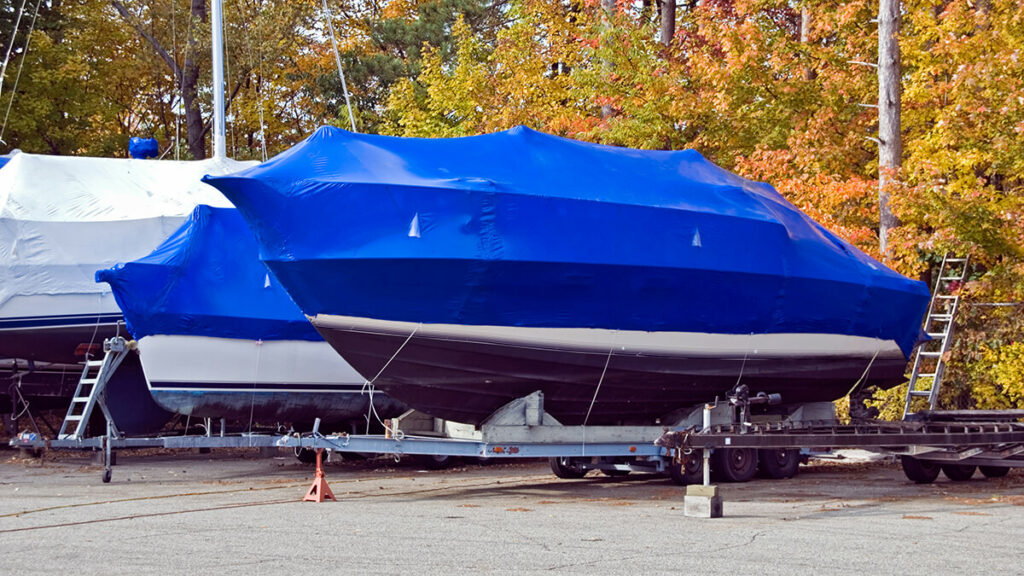
Grease the steering and tilt fittings, replace the fuel filter if it's due, and put the battery on a maintainer. Cover the boat and keep the motor trimmed down.
Common Winterizing Mistakes We See Every Spring
- Waiting one weekend too long. One hard freeze is enough to crack a block.
- Draining before stabilizing. Run the stabilized fuel through first, then drain. Once it's drained, you can't run it.
- Missing a drain plug. Many engines have drains on both sides, plus hoses and the circulating pump.
- Skipping the gear lube check. Milky lube in fall is a warning. Ignored, it's a cracked gearcase in spring.
- Using automotive antifreeze. Use only non-toxic propylene glycol made for marine and RV use.
- Storing an outboard tilted up. Water stays trapped. Store it trimmed down.
DIY or Professional Winterization?
We welcome DIYers. If you're comfortable with the steps above, you can absolutely do this yourself, and we'll get you the right OEM parts and answer your questions along the way.
If you'd rather not risk a missed drain plug, let our factory-trained technicians handle it. When we winterize your engine before freezing temperatures arrive, you're covered by our guarantee against freeze damage. We offer three winterization packages to fit your boat and budget. Call or text and we'll help you pick the right one.
Call 913-342-0011Text 913-342-0011Our Winterization Service
Boat Winterization FAQ
Do you need to winterize an outboard motor?
Yes. Outboards drain most of their cooling water on their own when trimmed down, but they still need stabilized fuel, fresh gear lube, and, on four-strokes, an oil change before storage. Water in the lower unit gear lube can freeze and crack the gearcase.
When should I winterize my boat in Kansas City?
Before the first hard freeze, which usually arrives in late October or early November. Don't wait for the first frost warning, because shop schedules fill up fast once the cold arrives.
What happens if I don't winterize my boat?
Water trapped in the block, manifolds, or gearcase can freeze, expand, and crack them. Untreated fuel can also gum up the fuel system. Either one can mean a costly repair before you can launch in spring.
Can I use car antifreeze in my boat?
No. Use non-toxic propylene glycol antifreeze made for marine and RV use. Automotive ethylene glycol is toxic and shouldn't be pumped through a raw-water cooling system that discharges into the lake.
How much does boat winterization cost?
It depends on your engine type and which package you choose. Call or text us at 913-342-0011 for a quote on your boat. DIY supplies typically cost far less than a single freeze-damage repair.
Related Guides
- Boat Winterization Service in Kansas City
- Making This Mistake Could Cost You Thousands of Dollars
- Shop Genuine OEM Boat Parts
Questions about your engine? Call or text 913-342-0011, Monday through Friday 9 to 5. Family-owned since 1984, we're here to help you protect your boat this winter and get back on the water fast in spring.